Introduction: Why Your Cookware Could Be the Weakest Link in Your Healthy Lifestyle – If you have switched to organic produce, filtered your water, and banished plastic containers, there is still one hidden source of chemicals that might be sneaking into your daily meals: your pots, pans, and baking sheets. The search for the best non toxic cookware and bakeware has never been more urgent—and more confusing. With dozens of brands claiming to be “green,” “eco-friendly,” or “non-stick without the risk,” how do you separate genuine safety from clever marketing?
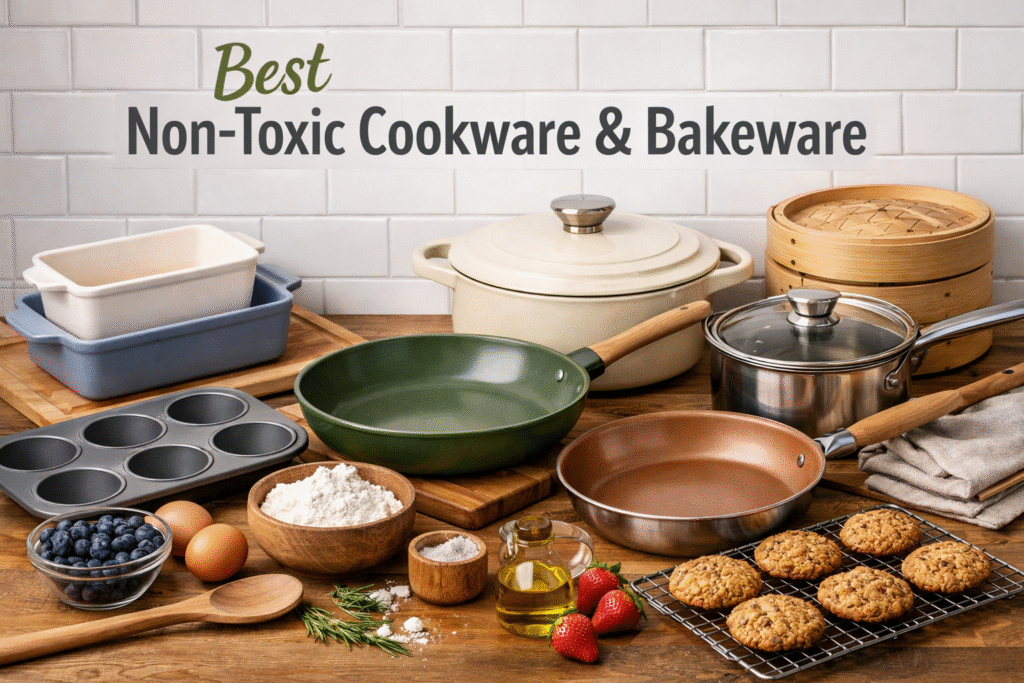
Recent tests conducted at the Drexel Food Lab have shed new light on this very question, examining over a dozen of the most popular non-toxic pans available in the US. The findings are eye-opening, and they confirm what health-conscious home cooks have long suspected: what you cook with matters just as much as the ingredients you put in your pan.
In this comprehensive guide, we will cut through the hype and reveal exactly which cookware and bakeware materials are truly safe, which brands deliver on their promises, and—most importantly—why making the switch to non-toxic cooking vessels is one of the smartest investments you can make for your family’s long-term health. We will also share our top picks, complete with affiliate links, so you can upgrade your kitchen with confidence.
The Hidden Dangers Lurking in Your Kitchen Cabinets
Before we dive into our top recommendations for the best non toxic cookware and bakeware, it is essential to understand what you are trying to avoid. For decades, the non-stick revolution brought us pans that made flipping eggs and releasing delicate crepes almost effortless. The trade-off, however, has been significant.
The primary culprit is a class of chemicals known as PFAS (per- and polyfluoroalkyl substances), often referred to as “forever chemicals” because they do not break down in the environment or the human body. These chemicals are used to create the slick, non-stick surface on traditional Teflon-coated pans. Studies have linked long-term exposure to PFAS with a range of health concerns, including decreased fertility, increased risk of certain cancers, liver damage, and thyroid disease. The International Agency for Research on Cancer (IARC) has classified one of these chemicals, PFOA, as “possibly carcinogenic to humans” due to links to kidney and testicular cancers.
Worse, when traditional non-stick pans are overheated or their surface becomes scratched, the risk increases. The coating can degrade, potentially releasing harmful fumes or flaking directly into your food. This is why any non-stick pan that shows signs of wear should be replaced immediately—or better yet, replaced with a genuinely safe alternative.
The good news is that you do not have to give up non-stick convenience to protect your health. A new generation of cookware, free from PTFE, PFOA, PFAS, lead, and cadmium, has arrived. And many of these options perform as well as—or even better than—their toxic predecessors.
Top Non-Toxic Cookware and Bakeware at a Glance
To help you quickly compare the leading options, we have compiled a detailed comparison table of the best non toxic cookware and bakeware based on material, key features, and price range.
| Product / Brand | Material | Key Features | Toxin-Free Claim | Oven-Safe Temperature | Affiliate Link |
|---|---|---|---|---|---|
| Caraway Cookware Set | Ceramic-coated aluminum | Sleek, colorful design; lightweight; excellent heat distribution; includes magnetic pan racks for storage | PTFE, PFOA, PFAS, lead, and cadmium-free | Up to 400°C (750°F) | Check Price on Amazon |
| Caraway Bakeware Set | Ceramic-coated steel | 11-piece set; non-stick; includes a baking sheet, loaf pan, and square pan; comes with a storage solution | PTFE, PFOA, PFAS, lead, and cadmium-free | Up to 400°C (750°F) | Check Price on Amazon |
| GreenPan Valencia Pro Set | Ceramic-coated aluminum | Durable Thermolon ceramic coating; metal-utensil safe; even heating; dishwasher-safe | PFOA, PFAS, lead, and cadmium-free | Up to 600°F | Check Price on Amazon |
| Xtrema 100% Ceramic | Pure, all-natural ceramic | Completely metal-free; no coatings to chip; extremely durable; suitable for all cooktops including induction | Lead, cadmium, PTFE, and PFOA-free | Up to 450°C (842°F) | Check Price on Amazon |
| Nordic Ware Naturals Bakeware | Uncoated aluminum | Professional-grade; excellent heat conductivity; naturally non-stick when seasoned; affordable | No non-stick coatings or PFAS | Up to 450°C (842°F) | Check Price on Amazon |
| Misen Stainless Steel Set | 5-ply stainless steel | Professional-level heat distribution; warp-resistant; non-reactive surface; lifetime warranty | Naturally non-toxic; no coatings | Broiler-safe | Check Price on Amazon |
| Pyrex Glass Bakeware | Tempered soda-lime glass | Non-porous; doesn’t absorb food residue; microwave, oven, fridge, and dishwasher safe | No harmful chemicals | Up to 425°F | Check Price on Amazon |
In-Depth Reviews: The Best Non-Toxic Cookware and Bakeware You Can Buy
Now, let us take a closer look at the standout products that represent the best non toxic cookware and bakeware in their respective categories.
#1. Caraway: The Most Stylish and Complete Non-Toxic System
Caraway has quickly become a household name for good reason. Their mission is to pioneer well-designed, non-toxic ceramic cookware that raises the standards of what you cook with. Their cookware features a mineral-based ceramic coating that is naturally slick, free from PTFE, PFOA, PFAS, lead, and cadmium, and distributes heat evenly to prevent hot spots.
In our testing, Caraway’s skillets aced the fried egg test, with the egg sliding around effortlessly with minimal oil. The handles on all pots and pans stayed remarkably cool to the touch, a testament to their thoughtful design. The brand also offers an 11-piece bakeware set that includes a baking sheet, loaf pan, brownie pan, and square pan, all with the same non-toxic ceramic coating and even including a magnetic storage solution.
Where to buy: You can find the Caraway Cookware Set and the Caraway Bakeware Set on Amazon.
#2. GreenPan: The Ceramic Non-Stick Pioneer
GreenPan is a true innovator in the world of non-toxic cookware, having developed the first PFAS-free ceramic non-stick coating, which they call Thermolon™. This coating is derived from sand, not chemicals, and is free from PFOA, PFAS, lead, and cadmium. Consumer Reports has placed GreenPan and Caraway at the top of its ratings for ceramic-coated pans.
The GreenPan Valencia Pro 11-Piece Cookware Set is particularly impressive. Our testers found its ceramic coating to be exceptionally durable, even standing up to metal utensils without scratching. The set includes a variety of pots and pans that excel at everything from searing pork chops to boiling pasta.
Where to buy: The GreenPan Valencia Pro Set is available on Amazon.
#3. Xtrema: Pure, Metal-Free, 100% Ceramic
If you want the absolute purest cooking surface, Xtrema is the brand for you. Unlike ceramic-coated cookware, which has a metal core, Xtrema pots and pans are made from 100% all-natural ceramic, with no metals and no coatings to chip or peel. This makes them an excellent choice for those with metal sensitivities or for anyone who wants a truly inert cooking surface.
Xtrema’s cookware is also remarkably durable, lead-free, cadmium-free, and PTFE/PFOA-free. It distributes heat evenly and is suitable for all cooking surfaces, including induction. While these pieces require a little more care than metal cookware, they offer unmatched peace of mind.
Where to buy: Visit the official Xtrema website to explore their collection.
#4. Nordic Ware Naturals: The Affordable Bakeware Champion
You do not need to spend a fortune to get high-quality, non-toxic bakeware. Nordic Ware is famous for its iconic Bundt pans, but its Naturals line of bakeware is a hidden gem for health-conscious bakers. These are professional-grade, uncoated aluminum baking sheets and pans. They have no non-stick coating at all, which means no PFAS, no PTFE, and no mystery chemicals.
The key to using uncoated aluminum is to either season it like you would cast iron or simply line it with parchment paper. Once seasoned, it becomes naturally non-stick and will last you a lifetime. It is also incredibly responsive to heat, producing beautifully browned cookies and pastries.
Where to buy: The Nordic Ware Naturals 5-Piece Baking Set is available at Sam’s Club.
#5. Misen Stainless Steel: The Professional’s Choice
For those who prefer the durability and performance of stainless steel, Misen offers an exceptional 5-ply stainless steel cookware set. Stainless steel is naturally non-toxic because it is non-reactive and does not leach chemicals or react with acidic foods. Misen’s 5-ply construction ensures warp-proof, even heating across the entire surface, eliminating hot spots that can burn your food.
While stainless steel requires a little more oil and technique to prevent sticking, the results are worth it. You can achieve a beautiful, deep sear on meats and a perfect fond (the browned bits on the bottom of the pan) that forms the basis for incredible pan sauces.
Where to buy: You can find the Misen Stainless Steel Cookware Set on the Misen website.
Read More :- Top 5 Kitchen Glassware Sets: The Ultimate Guide to Choosing the Best Durable & Stylish Options for Your Home
Pros and Cons of Switching to Non-Toxic Cookware and Bakeware
Making the switch to the best non toxic cookware and bakeware is a significant decision for any home cook. Here is a balanced look at the advantages and potential drawbacks.
Pros 👍
-
Peace of Mind: This is the most significant benefit. You can cook every meal knowing that no harmful PFAS, PFOA, PTFE, lead, or cadmium is leaching into your food.
-
Better Health: By eliminating exposure to endocrine-disrupting chemicals and potential carcinogens, you are making a proactive choice for your long-term health and the health of your family.
-
Superior Performance: Many non-toxic options, such as ceramic and stainless steel, offer exceptional heat distribution and retention, allowing you to cook more evenly and achieve better results.
-
Durability: High-quality stainless steel, cast iron, and 100% ceramic cookware can last for decades, or even a lifetime, with proper care. This makes them a more sustainable and cost-effective choice in the long run.
-
Versatility: Many non-toxic pans are oven-safe, allowing you to start a dish on the stovetop and finish it in the oven.
Cons 👎
-
Higher Initial Cost: Truly non-toxic cookware from reputable brands like Caraway, GreenPan, and Xtrema often comes with a higher upfront price tag compared to traditional non-stick pans.
-
Learning Curve: If you are used to the effortless slide of a Teflon pan, you may need to adjust your cooking techniques. Ceramic and stainless steel may require a little more oil or lower heat to prevent sticking.
-
Care Requirements: Some non-toxic materials, such as ceramic and cast iron, require specific care. Ceramic pans should not be used with metal utensils, and cast iron needs to be seasoned to maintain its non-stick properties.
-
Weight: Cast iron and high-quality stainless steel pans can be considerably heavier than their cheap, non-stick counterparts, which might be a consideration for some cooks.
FAQ: Your Most Pressing Questions Answered
Q1: What exactly makes cookware “non-toxic”?
A: There is no official, regulated definition of the term “non-toxic cookware.” In practice, it refers to cookware made from stable, inert materials that do not leach harmful chemicals into food under normal cooking conditions. This includes materials like stainless steel, cast iron, carbon steel, glass, and 100% ceramic, as well as ceramic-coated cookware that is explicitly free from PTFE, PFOA, PFAS, lead, and cadmium.
Q2: Is ceramic cookware really non-toxic?
A: Yes, high-quality ceramic cookware is considered a safe and non-toxic option. It is important to distinguish between 100% ceramic cookware (like Xtrema) and ceramic-coated cookware. Both are generally safe, provided they are from a reputable brand that verifies its products are free from lead, cadmium, and other heavy metals. Consumer Reports’ tests have shown that pans from brands like Caraway and GreenPan perform very well and are free from harmful chemicals.
Q3: Is stainless steel safe for cooking?
A: Absolutely. Stainless steel is one of the safest materials for cookware. It is non-reactive, meaning it will not leach chemicals or metallic flavors into your food, even when cooking highly acidic dishes like tomato sauce. It is also extremely durable and does not require any coating, making it a naturally non-toxic and long-lasting choice.
Q4: Can I put non-toxic cookware in the dishwasher?
A: It depends on the specific product. Most ceramic-coated and stainless steel cookware is labeled as dishwasher-safe. However, to extend the life of the coating on ceramic pans and to prevent any potential dulling of stainless steel, hand-washing is often recommended. Always check the manufacturer’s instructions for the best care practices.
Q5: What about non-stick bakeware?
A: Traditional non-stick bakeware is often coated with PTFE (Teflon) or other PFAS-based chemicals. The best non-toxic alternatives include uncoated aluminum bakeware (like Nordic Ware Naturals), glass bakeware (like Pyrex), ceramic bakeware, or stainless steel baking sheets. You can also use silicone baking mats or parchment paper on uncoated pans to prevent sticking.
Q6: How do I know if a brand is truly non-toxic?
A: Look for third-party certifications and transparent labeling. Reputable brands will explicitly state that their products are free from PFAS, PTFE, PFOA, lead, and cadmium. They will often provide lab test results on their website. Be wary of vague marketing terms like “green” or “eco-friendly” without specific toxin-free claims.
Q7: Is it worth replacing all my cookware at once?
A: Not necessarily. You can start by replacing the pieces you use most often, such as your go-to frying pan and a saucepan. From there, you can gradually build a full collection of non-toxic cookware. This approach spreads out the cost and allows you to get a feel for the new materials before committing to a full set.
Final Thoughts: Your Health is Worth the Investment
The shift to the best non toxic cookware and bakeware is more than just a kitchen upgrade—it is a profound act of self-care. Every time you prepare a meal for yourself or your loved ones, you are making a choice that impacts your health, your environment, and your future. By eliminating toxic coatings from your kitchen, you are not sacrificing performance; you are gaining the confidence that comes from knowing exactly what is—and what is not—touching your food.
Do not let the initial investment deter you. Consider the cost of a high-quality, non-toxic pan spread out over a decade of daily use. When you factor in the potential health costs of chronic exposure to forever chemicals, the choice becomes clear. Whether you choose the stylish versatility of Caraway, the proven durability of GreenPan, the pure simplicity of Xtrema, or the timeless reliability of stainless steel, you are making an investment that will pay dividends in health, flavor, and peace of mind for years to come. Your family deserves a safe kitchen, and now you have the knowledge to build one.
Disclosure: This article contains affiliate links. If you purchase through these links, we may earn a small commission at no extra cost to you. This helps support our independent testing and research.